The best sake for beginners: what to buy first, by what you already drink
Forget brand lists. Pick your first sake from the drink you already like, in a size you will finish, and know the two words that matter on the label.
 Sake
SakeAlmost every "best sake for beginners" list is a list of brands. That is the wrong shape of advice, because the brands available to you depend entirely on where you live, and because a brand tells you nothing about whether you will like it.
Here is a more useful approach: pick your first bottle from the drink you already enjoy, buy it in a size you will actually finish, and learn the two words on the label that do most of the work.
Start from what you already drink
| If you like… | Start with | Why |
|---|---|---|
| Crisp white wine, Sauvignon Blanc, dry cider | Junmai ginjo, cold | Aromatic, clean, fruit-forward. The easiest entry there is |
| Chardonnay, richer whites, dry sherry | Junmai, cool or warm | More body and savoury depth |
| Natural wine, cloudy cider, kombucha | Kimoto or yamahai junmai | Higher acidity, funkier, more alive |
| Prosecco, anything sparkling | Sparkling sake | Lower alcohol, lightly sweet, genuinely easy |
| Coconut, horchata, milky drinks | Nigori | Cloudy, rounded, sweeter |
| Nothing — you are not much of a drinker | Sparkling sake or nigori, cold | Both are approachable and neither demands attention |
If you take one thing from this article: junmai ginjo, cold, is the right first bottle for most people.
Buy 300ml, not 720ml
This is the advice nobody gives and everybody needs.
Sake oxidises quickly once opened — a week or two in the fridge, not months. A 720ml bottle bought by someone who drinks a small glass occasionally will mostly be wasted, and worse, the last third will taste flat and the drinker will conclude they dislike sake.
Two 300ml bottles of different styles teach you more than one 720ml bottle of a single style, and cost about the same. Buy a junmai ginjo and a junmai. Drink them side by side. You will learn what the designation actually does.
The two words that matter
You do not need to learn the full system to buy a first bottle. You need two words.
Junmai (純米) — "pure rice." No distilled alcohol added; rice, water, koji and yeast only. Fuller, more savoury, more rice character.
Ginjo (吟醸) — the rice has been polished to 60% or less of its original size and fermented cold and slow. Lighter, cleaner, and noticeably more aromatic — pear, melon, white flowers.
Put together, junmai ginjo means both: no added alcohol, highly polished, aromatic. That is why it is the safe first bottle.
The full picture — all eight designations, what the polishing number really tells you, and why added alcohol is not cheating — is in what sake grades actually mean. Fifteen minutes there will make every subsequent purchase better.
Serve it in a wine glass
Not a ceramic ochoko. Not a wooden masu.
A wine glass has a bowl that collects aroma and a rim that delivers it to your nose. For an aromatic ginjo — the very thing you paid extra for — that is the difference between smelling it and not. Japanese tasting competitions use glassware for exactly this reason.
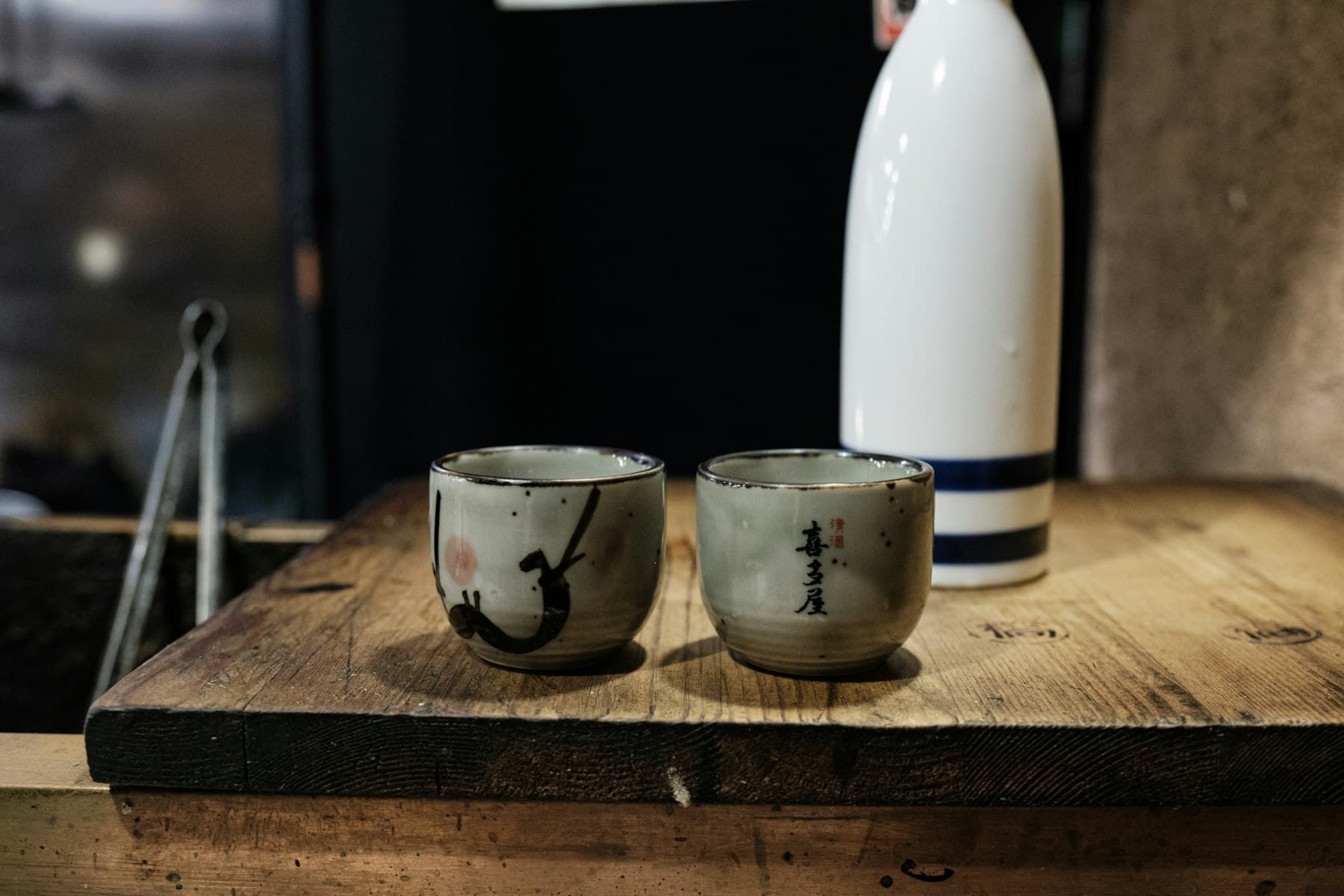
The small ceramic cup is a lovely object and it comes into its own for warm sake, where the aroma needs no help and the vessel keeps the heat. For your first cold bottle, use the wine glass.
Which temperature to use for which style is the fastest single upgrade available to you: sake serving temperature.
The four beginner mistakes
1. Leaving it open for months. Refrigerate after opening, drink within a week or two. It is closer to wine than to whisky.
2. Starting with the most expensive bottle. A daiginjo polished to 35% is a subtle, delicate thing. With nothing to compare it against, most beginners register "nice" and learn nothing. Start in the middle.
3. Drinking it warm because you saw that somewhere. Warm the savoury styles, not the aromatic ones — and never in a microwave.
4. Buying whatever the supermarket has. Ordinary sake — futsushu, no designation on the label — is fine as a drink and a bad introduction. Look for one of the eight designations.
Where to buy your first bottle
Buy from a shop that can tell you something about what it sells, and that stores its stock cold if it sells unpasteurised sake. In practice this means a specialist retailer rather than a supermarket.
Do not buy namazake (生酒) as a first bottle by mail order unless the retailer explicitly describes how they ship it cold. Unpasteurised sake is delicious and unforgiving; a warm journey ruins it, and you will blame the sake.
Use the region selector above — we only show shops that can legally deliver to you.
The short version
- Junmai ginjo, 300ml, cold, in a wine glass. That is the answer for most people.
- Buy two small bottles of different styles rather than one large one.
- Learn two words: junmai and ginjo.
- Refrigerate after opening; drink within a fortnight.
- Skip nama by mail order until you know a retailer ships it properly.
Last verified 5 August 2026.
Common questions
What sake should I try first?
A junmai ginjo, in a 300ml bottle, served cold. It is aromatic and easy to like, the smaller bottle means you can finish it before it oxidises, and the designation tells you the brewery took some care. If you already like richer drinks, a junmai is a better first bottle.
Is expensive sake better for a beginner?
No. The most expensive styles — highly polished daiginjo — are delicate and easy to miss the point of if you have nothing to compare them with. A mid-priced junmai ginjo teaches you more, and a second contrasting bottle teaches you more still.
How should a beginner serve sake?
Cold, in a wine glass, for anything aromatic. A wine glass is genuinely better than a small ceramic cup for a first bottle because it concentrates the aroma where you can smell it. Save the ochoko for warm sake.
How long does sake last once opened?
Refrigerate it and drink it within a week or two. Sake oxidises far faster than spirits and is closer to wine in that respect. This is the single most common beginner mistake — leaving a bottle open for months and then judging it.
Read next
 Sake
SakeHow to store sake: before opening, after opening, and the one bottle that cannot wait
Sake is closer to wine than to whisky. Where to keep it, how long it really lasts, and why an opened bottle on the shelf is the most common mistake.
 Sake
SakeJunmai, ginjo, daiginjo: what sake grades actually mean
The eight legal sake designations, what the polishing percentage tells you, and how to read a Japanese label in about a minute.
 Sake
SakeOchoko, masu or wine glass: does the vessel really change the taste?
Yes, and more than you would expect. What each traditional vessel is for, why a wine glass often wins, and which ones to buy first.