Sake vs shochu vs soju: what is actually different
Three drinks that get confused constantly. One is brewed, one is distilled, one is Korean — and the word sake does not mean what most guides say it means.
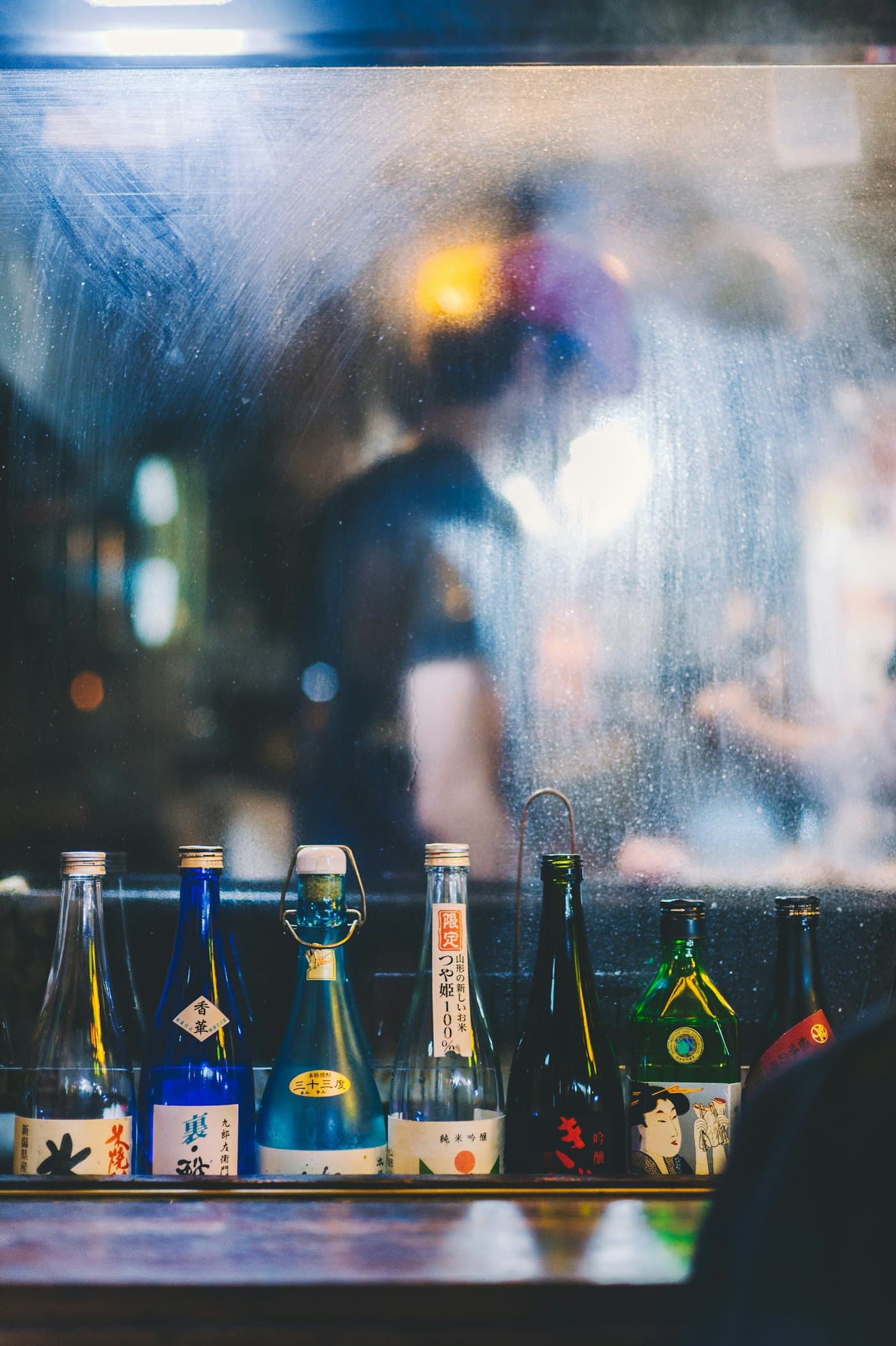 Sake
SakeThese three get confused more than any other set of drinks in the Japanese and Korean canon, and the confusion is not the reader's fault. English-language guides routinely describe shochu as "Japanese vodka," soju as "Korean sake," and sake as "rice wine" — three descriptions that are each wrong in a different way.
Here is what actually separates them.
The one-line version
| What it is | Typical strength | Country | |
|---|---|---|---|
| Sake (nihonshu) | Brewed from rice using koji | 15–16% ABV | Japan |
| Shochu | Distilled, from barley, sweet potato, rice or others | 25% ABV | Japan |
| Soju | Usually a diluted neutral spirit, sweetened | 16–20% ABV | Korea |
Brewed, distilled, and mostly industrial. That is the whole distinction, and everything below is detail.
Sake is brewed, and it does something no other drink does
Sake starts like beer: a grain, which cannot ferment on its own because its energy is stored as starch rather than sugar.
Beer solves that by malting — germinating the barley so it produces its own enzymes — and then converting the starch to sugar before fermentation starts. Wine skips the problem entirely, since grapes arrive full of sugar.
Sake solves it with koji (Aspergillus oryzae), a mould cultivated on steamed rice. Koji produces the enzymes that break starch into sugar, and here is the part that is genuinely unusual: it does so at the same time as the yeast is fermenting that sugar into alcohol, in the same tank. Saccharification and fermentation run simultaneously.
That process — multiple parallel fermentation — is why sake can reach 15–20% ABV without distillation, which is higher than any other brewed drink manages. It is also the technique UNESCO inscribed as intangible cultural heritage in December 2024.
"Rice wine" is therefore misleading. Nothing about sake's production resembles winemaking. The only similarity is the strength and the glass.
Shochu is distilled, and it is not vodka
Shochu is Japanese, and it is the drink most Japanese people actually consume at home in the volumes English speakers assume are sake.
It also uses koji — the fermentation stage looks a lot like sake's — but then it is distilled, which changes everything downstream.
The important split is legal:
- Korui (甲類) — multiply distilled in a continuous still, capped at 36% ABV. Clean, neutral, cheap, used as a mixer base. This is the shochu that gets called vodka, and for this category the comparison is at least arguable.
- Otsurui (乙類), also called honkaku (本格) — single-distilled in a pot still, capped at 45% ABV. This is the interesting one, and it is nothing like vodka. Single distillation deliberately keeps the character of the base ingredient.
And the base ingredient varies enormously:
| Base | Character |
|---|---|
| Barley (mugi) | Light, biscuity, the easy entry point |
| Sweet potato (imo) | Earthy, rich, sometimes floral — the most divisive and most loved |
| Rice (kome) | Soft, clean, closest to sake in aroma |
| Buckwheat (soba) | Nutty, delicate |
| Brown sugar (kokuto) | Amami islands only; rum-adjacent but drier |
Awamori is Okinawa's version: made with long-grain Thai rice and black koji, aged as kusu. It is legally its own thing and worth seeking out.
Honkaku shochu at 25% is typically drunk with hot water (oyuwari), cold water (mizuwari), or over ice. Neat is unusual.
Soju is Korean, and mostly a different kind of product
Traditional Korean soju was distilled from grain and is a close cousin of shochu — andong soju still is.
But the soju in the green bottle that dominates supermarket shelves is a different animal. It is generally made by diluting a highly rectified neutral spirit with water and adding sweeteners, landing around 16–20% ABV. It is designed to be cheap, drinkable and consistent, and it does that job extremely well.
Calling it "Korean sake" is wrong twice over: it is not brewed, and it is not Japanese.
The Korean drink that genuinely parallels sake is makgeolli — brewed from rice with nuruk (a Korean starter culture serving a similar function to koji), unfiltered, cloudy, around 6–8% ABV. If someone offers you "Korean sake," makgeolli is what they should mean.
The vocabulary problem
Here is the thing almost no English guide explains.
In Japanese, sake (酒) means alcohol. Any alcohol. Beer is sake. Whisky is sake. Wine is sake. If you ask for "sake" in Japan you are asking for a drink, not a specific one.
The word for the drink English speakers mean is nihonshu (日本酒) — literally "Japanese alcohol" — or seishu (清酒), "clear alcohol," which is the term used in the liquor tax law.
This matters practically: if you are reading a Japanese label or a brewery's site, seishu is the word that tells you it is sake in the English sense.
Which should you start with?
If you like white wine or dry cider: start with sake. A junmai ginjo is the easiest entry — aromatic, clean, no acquired taste required. Our guide to what the label words mean will save you from buying blind.
If you like whisky, mezcal or anything with character: start with honkaku shochu, specifically a sweet potato imo shochu. It is the one with the most to say.
If you want something to drink quickly with fried chicken: soju is genuinely good at that and nobody should be snobbish about it.
The five things to remember
- Sake is brewed, not distilled, and koji is what makes that possible.
- Shochu is distilled, Japanese, and honkaku shochu is nothing like vodka.
- Soju is Korean, usually a diluted neutral spirit, and unrelated to sake.
- "Rice wine" describes nothing accurately. Sake is brewed; wine is not.
- In Japanese, "sake" means alcohol. The word you want is nihonshu.
Last verified 5 August 2026.
Common questions
Is sake a wine or a spirit?
Neither, strictly. Sake is brewed from grain like beer, but it reaches 15–16% ABV without distillation, which is closer to wine in strength. Brewed, not distilled, and served like wine — which is why neither label fits cleanly.
Is shochu the same as sake?
No. Sake is brewed and typically 15–16% ABV. Shochu is distilled and typically 25%. They are made in the same country, often by the same techniques up to the point of fermentation, and then diverge completely.
Is soju Korean sake?
No. Soju is Korean and, in its mass-market form, is a neutral spirit diluted with water and sweetened, usually 16–20% ABV. Traditional soju is distilled from grain and closer to shochu. Neither is sake.
Why do Japanese people not call it sake?
Because in Japanese, sake (酒) means alcohol in general — beer is sake, whisky is sake. The specific drink English speakers mean is nihonshu (日本酒), literally Japanese alcohol, or seishu (清酒) in legal texts.
Read next
 Sake
SakeHow to store sake: before opening, after opening, and the one bottle that cannot wait
Sake is closer to wine than to whisky. Where to keep it, how long it really lasts, and why an opened bottle on the shelf is the most common mistake.
 Sake
SakeJunmai, ginjo, daiginjo: what sake grades actually mean
The eight legal sake designations, what the polishing percentage tells you, and how to read a Japanese label in about a minute.
 Sake
SakeOchoko, masu or wine glass: does the vessel really change the taste?
Yes, and more than you would expect. What each traditional vessel is for, why a wine glass often wins, and which ones to buy first.