Is your Japanese whisky actually Japanese? How to check before you spend $200
The 2021 labelling standard, why it is still voluntary, and four checks that tell you whether a bottle is really Japanese whisky.
 Japanese whisky
For most of the last decade, there was no legal definition of Japanese whisky.
A company could import bulk Scotch or Canadian whisky, bring it to Japan, blend it, bottle it, put a Japanese name and a picture of Mount Fuji on the label, and sell it worldwide as Japanese whisky. Some did exactly that. A few of those bottles won awards. Many are still on shelves.
That is no longer the whole story, but the fix is narrower than most people think — and if you are about to spend real money, the difference matters.
What changed
On 12 February 2021 the Japan Spirits & Liqueurs Makers Association (JSLMA) published a labelling standard for whisky. It took effect on 1 April 2021 with a three-year transition, so the deadline for compliance was 31 March 2024.
To be labelled "Japanese Whisky" under the standard, a spirit must meet all of the following:
| Requirement | The rule |
|---|---|
| Raw materials | Malted grain must be used; water must be sourced in Japan |
| Production | Saccharification, fermentation and distillation at a distillery in Japan |
| Distillation strength | Not more than 95% ABV off the still |
| Maturation | At least 3 years in wooden casks of 700 litres or less, in a warehouse in Japan |
| Bottling | In Japan, at 40% ABV or higher |
That is a serious specification. It closes the imported-bulk loophole and it rules out the "distilled elsewhere, matured elsewhere, bottled in Japan" model entirely.
The catch: it is voluntary
This is the part that gets left out of most articles.
The JSLMA standard is not law. It is an industry agreement, and it binds only JSLMA member companies. A producer that is not a member is not covered by it. Nor does it automatically govern how a bottle is described by a retailer or an importer in another country.
So the standard has substantially cleaned up the category — the major houses signed up and relabelled — without making it impossible to encounter a misleading bottle, particularly at the cheaper end and particularly from brands you have never heard of.
There is movement toward something firmer: in 2025 the JSLMA began work toward registering Japanese whisky as a protected geographical indication, which would give it legal force. Until that lands, the checks below are still worth doing.
Four checks, in order of usefulness
1. Look for the certification mark
In March 2025 the JSLMA introduced a certification logo for whisky that meets the standard. It is the fastest possible check: if the bottle carries the mark, the producer is a member and is asserting compliance. Absence is not proof of anything — plenty of excellent small producers are not members — but presence is a strong positive signal.
2. Read the front label for hedge words
The category that replaced the old loophole is honest, and it labels itself. Look for:
- "World Blend" / "World Malt" / "World Whisky" — this is the producer telling you the liquid includes whisky from outside Japan. Suntory's Ao and Nikka's Session are both openly sold this way, and both are perfectly good drinks. They are just not Japanese whisky, and should not be priced as if they were.
- "Product of Japan" with no distillery named — a country of bottling, not a claim about where the spirit was made.
- "Blended in Japan" / "Bottled in Japan" — describes the last step only. This is the phrasing the old loophole ran on.
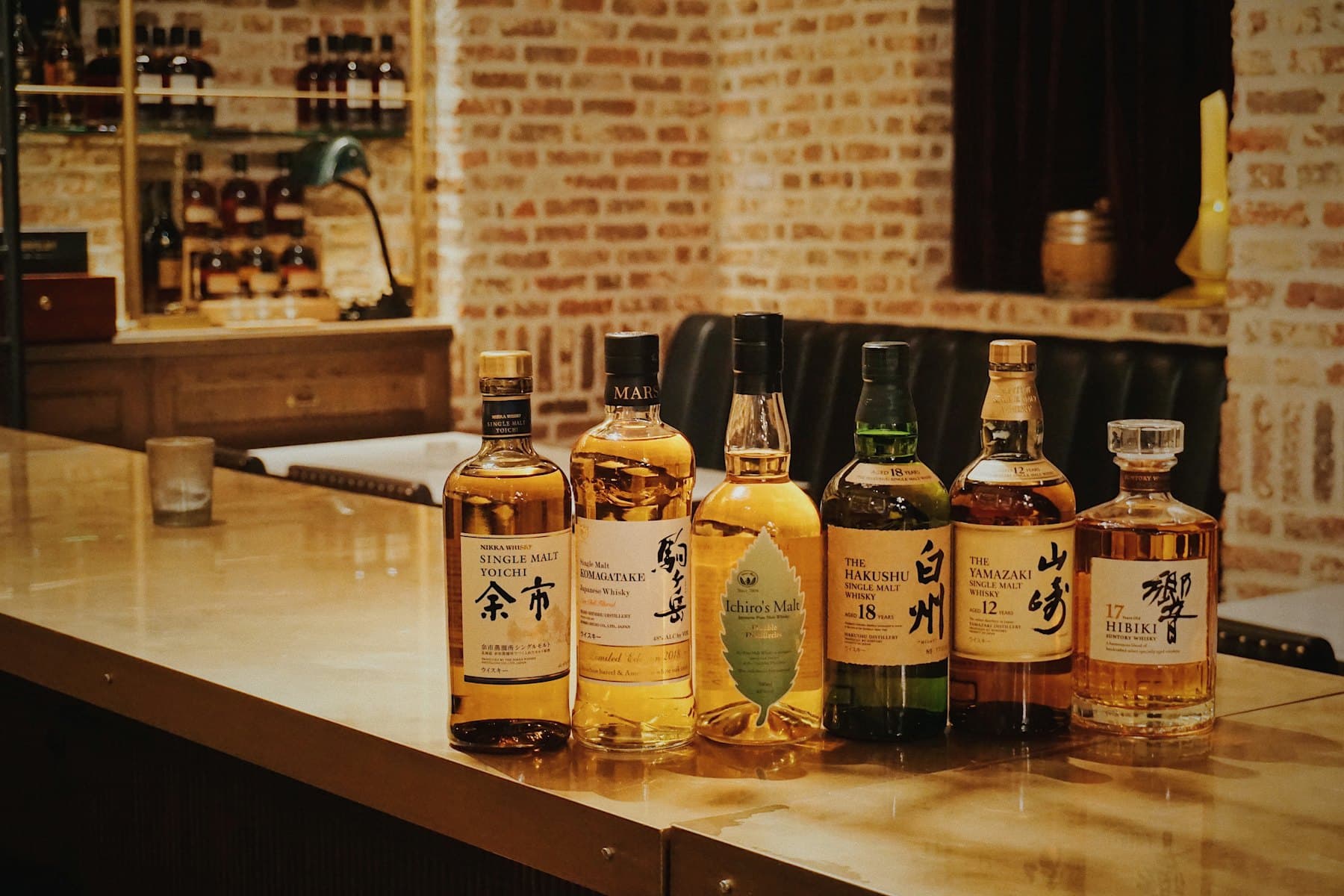
The word you want is a distillery name: Yamazaki, Hakushu, Yoichi, Miyagikyo, Chichibu, Fuji, Mars Shinshu, Kanosuke, Yuza. A whisky that names a real Japanese distillery is making a checkable claim.
3. Check whether an age statement is present — and be relaxed if it is not
Japanese whisky went through a genuine stock crisis in the 2010s. Demand outran what had been distilled fifteen years earlier, and the big houses withdrew most of their age-stated bottlings. Many have returned, but no-age-statement (NAS) releases remain normal at every price point.
NAS is therefore not a warning sign in this category the way it might be elsewhere. The standard's own three-year minimum applies regardless. Judge NAS bottles on distillery and price, not on the missing number.
4. Be suspicious of the specific price band $60–120 with no distillery
This is where the category's problems concentrate. Above roughly $150, you are generally buying named-distillery whisky from a house with a reputation to protect. Below about $50, nobody is pretending. The awkward middle is where a Mount Fuji label, a Japanese-sounding brand name and no verifiable production information can still be worth the producer's while.
If a bottle in that band names no distillery, carries no certification mark and its brand has no distillery you can look up, treat it as a world blend that has not said so.
What you can actually get for the money
A rough map of the category as it stands in 2026, without naming prices we have not re-checked this month:
Around $40–70 — the everyday shelf. Suntory Toki and Nikka Coffey Grain sit here. Both are made by their producers from their own distilleries, both are consistent, and both are better in a highball than sipped neat — which is how they are drunk in Japan anyway. Start here if you are new.
Around $70–120 — the sweet spot. Nikka From The Barrel is the reference point: cask-strength-ish, richly flavoured, and one of the best value whiskies made anywhere. Kirin's Fuji range and the smaller Mars bottlings live in the same territory. This band gives you the most whisky per unit of money in the category.
Around $120–200 — the flagship range. Hakushu and Yamazaki entry expressions, when you can find them at anything like list price, plus single-cask and limited releases from the newer distilleries — Chichibu, Kanosuke, Yuza, Akkeshi. The newer distilleries are, in our view, where the interesting drinking currently is: they are young, they are precise, and they are not yet priced on brand recognition.
Above $200. Now you are buying scarcity as much as liquid. That is a legitimate thing to buy, but be clear with yourself that you are doing it, and buy from a retailer with real provenance — the counterfeit problem at the top of this category is serious and growing.
A note on buying from Japan directly
Japanese-market releases never leave Japan in quantity, and Japan-based exporters list bottles that simply do not appear on Western shelves. If you are hunting something specific, a Japan-based retailer is often the only route, and shipping from Japan is usually faster than people expect.
Two things to budget for: import duty and VAT/sales tax are yours to pay on arrival in most countries, and they are not trivial on a $300 bottle. Factor them in before comparing prices against a domestic retailer, or the saving evaporates.
The short version
- Certification mark present → good signal.
- A real distillery named on the label → a claim that can be checked.
- "World blend", "blended in Japan", "product of Japan" with no distillery → not Japanese whisky, whatever the label design implies.
- No age statement → fine, normal, ignore it.
- $60–120 with no distillery and no mark → the risk zone.
None of this means world blends are bad whisky. Several are excellent and some are bargains. It means you should know which one you are buying, and pay the price of that thing rather than the price of the other thing.
Last verified 5 August 2026. Standard as published by the Japan Spirits & Liqueurs Makers Association, effective 1 April 2021, compliance deadline 31 March 2024.
Common questions
What legally counts as Japanese whisky?
Under the 2021 JSLMA labelling standard, the whisky must use malted grain and Japanese water, be saccharified, fermented and distilled in Japan, matured at least three years in wooden casks of 700 litres or less in Japan, and bottled in Japan at 40% ABV or higher.
Is the Japanese whisky standard legally binding?
No. It is a voluntary industry agreement that binds only members of the Japan Spirits & Liqueurs Makers Association. Producers outside the association are not covered, which is why label checks still matter.
What does world blend mean on a Japanese whisky label?
It means the liquid includes whisky made outside Japan. Brands that use it are being honest — the drink may be very good — but it is not Japanese whisky and should not be priced as if it were.
Read next
 Japanese whisky
A Japanese whisky gift guide by budget — and the delivery rules nobody mentions
What to give at $50, $100 and $200, why the famous bottles are the weakest gifts right now, and the shipping rules that quietly ruin alcohol presents.
 Japanese whisky
How to make a Japanese highball at home
The ratio, the ice, the glass and the stir. Why the Japanese version tastes different from whisky and soda, and which bottle to use.
 Japanese whisky
Japan's new whisky distilleries: where the interesting drinking is now
Kanosuke, Yuza, Saburomaru, Shizuoka, Akkeshi. Who they are, what makes each one different, and why they are better value than the famous names.